|
Rock Wall Chapter,
NSDAR Rockwall, TX | Organized in February 1978 |

| Chapter History | |||||||||||||||||||||||||||||||||||||||||||||||||||
|
Rock Wall Chapter, NSDAR was organized on February 3, 1978, by Mrs. James H. Goodson, and was named for an underground wall of rock. Read more about the wall lower in this page. The chapter was organized with a membership of thirty-one. Organizing officers were Minnette Pelphrey Goodson (Mrs. James H.), regent; Gretchen Ernst Bell (Mrs. Frank A.), vice regent; Ruth Hempel Peck (Mrs. Oscar P.), chaplain; Carolyn Cooksey Duckworth (Mrs. E. Neil), recording secretary; Nancy Lynn Marazoff Roland (Mrs. George), corresponding secretary; Jane Rogers Hudson (Mrs. Ernest L.), treasurer; Mrs. Anna Gray Davis, registrar; Delores Anne Davidson (Mrs. Raymond); historian; Jeannette Fain Cornelius (Mrs. G. Clifford), librarian; Carrye Latimer Ablowich (Mrs. Dave), parliamentarian. |
|||||||||||||||||||||||||||||||||||||||||||||||||||
| Past Regents | |||||||||||||||||||||||||||||||||||||||||||||||||||
|
|||||||||||||||||||||||||||||||||||||||||||||||||||
| County History | |||||||||||||||||||||||||||||||||||||||||||||||||||
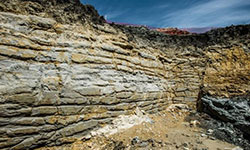
First settled in the 1840s, current Rock Wall Country was a part of Kaufman County until 1873, when Rockwall County was created. With an area of 147 square miles, this is the smallest of Texas' 254 counties. The county and city of Rockwall were named for an underground formation of rock discovered in the early 1850s. Crossed by the Missouri, Kansas & Texas Railroad, Rockwall county is an area of fertile farmland. The location here of the aluminum industry and the creation of Lake Ray Hubbard from the East Fork of the Trinity River diversified the local economy. In 1852, locals who found a naturally-jointed geological formation, and it had the appearance of being completely man made. They discovered the rock wall, parts of which were above ground, when digging a well. The wall extends about 3.5 miles wide by 5.6 miles long. The bottom of the "wall" has not been reached. A close-up of the rock layers shows the stacking, which some theorists say can only be man made.Theories have ranged from a lost city buried far below, to aliens, to nothing more than a natural rock formation. Pioneer Terry Wade suggested naming the town Rockwall after the curious geological formation. The name was accepted, and the town of Rockwall was platted on April 17, 1854. |
|||||||||||||||||||||||||||||||||||||||||||||||||||
|
|